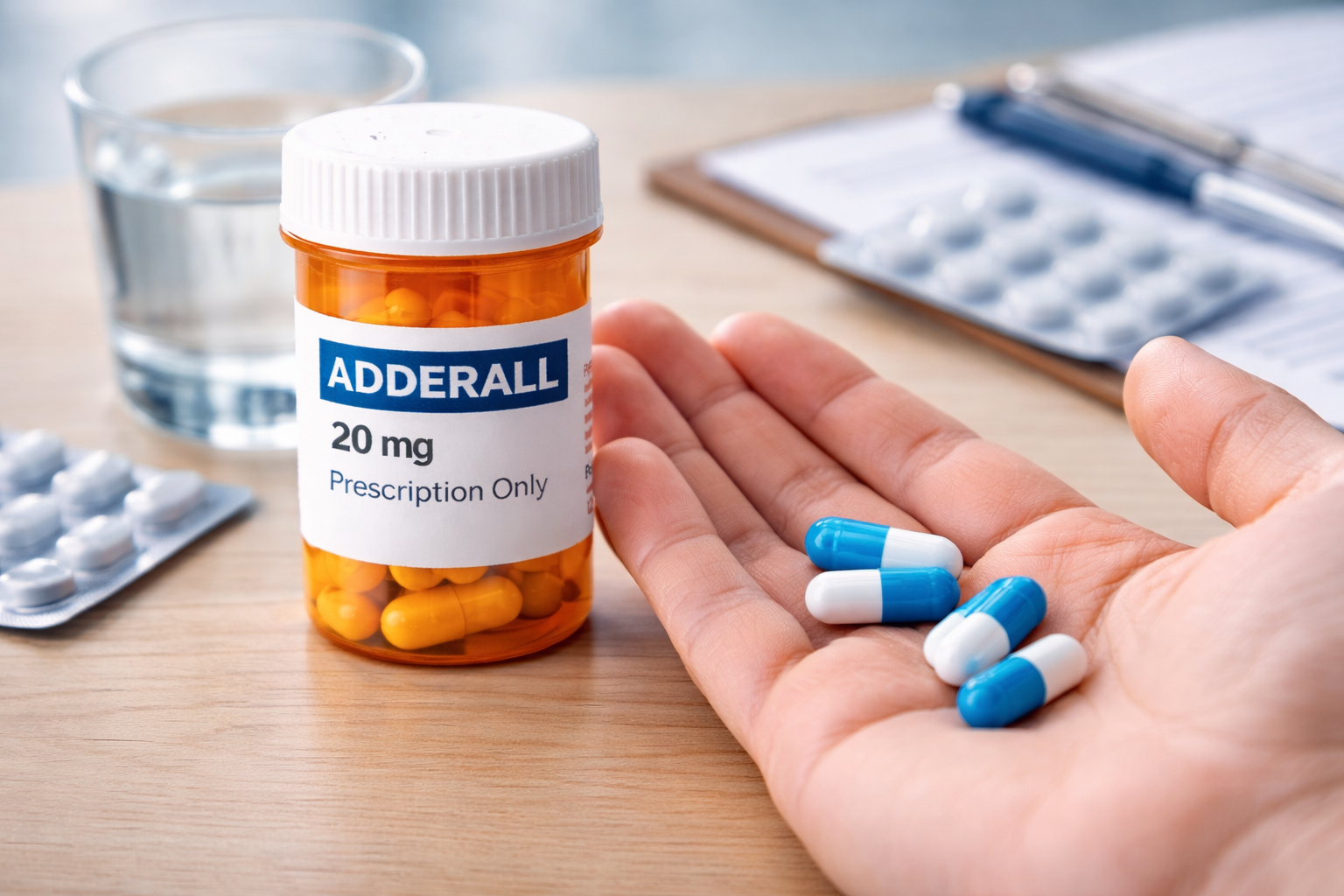
Taking Adderall for the first time often comes with a mix of curiosity, hope, and understandable nerves. Many people start the medication after years of struggling with focus, motivation, or mental overwhelm, and they want to know what will actually change—and what’s normal versus concerning.
Adderall can be very effective, but the first experience is rarely identical for everyone. How it feels depends on your brain chemistry, the dose, the formulation, and how your body adjusts during the first few days and weeks. Things can get even more confusing when you start reading reports from people who have been taking Adderall every day for many years; their experience is highly unlikely to be the same as yours!
What Adderall Is and Why It’s Prescribed
Adderall is a prescription stimulant medication made from mixed amphetamine salts. It is most commonly prescribed for Attention-Deficit/Hyperactivity Disorder (ADHD) and, in some cases, narcolepsy.
The medication works by increasing dopamine and norepinephrine in the brain. These neurotransmitters play a major role in attention, motivation, alertness, and impulse control. In people with ADHD, these systems are often underactive, which is why Adderall tends to create focus and calm rather than overstimulation.
How Quickly Adderall Works the First Time
Most people notice Adderall beginning to work within 30 to 60 minutes of their first dose. The timing and duration depend on the formulation prescribed.
- Immediate-release (IR) Adderall typically lasts about 4–6 hours
- Extended-release (XR) Adderall can last 8–12 hours or longer
Because your nervous system hasn’t adapted yet, the first dose may feel more noticeable than later doses. This is common and doesn’t necessarily mean the medication is too strong.
What Adderall Feels Like the First Time
One of the most frequently reported first-time effects is a sense of mental clarity. Thoughts may feel quieter, more linear, and easier to manage. Many people describe feeling less scattered and more able to stay with one task at a time.
You may notice changes such as:
- Improved ability to focus without forcing it
- Less mental noise or internal distraction
- Easier task initiation and follow-through
Rather than feeling “amped up,” people with ADHD often feel grounded and calm. Tasks that once felt overwhelming may suddenly feel approachable, which can be surprising or even emotional the first time it happens.
Emotional Changes You Might Notice
Emotionally, Adderall can make feelings feel more manageable. Frustration may decrease, emotional reactions may feel less intense, and stressful situations may feel easier to navigate.
At the same time, some people notice temporary emotional side effects, particularly early on. These can include:
- Mild anxiety or nervousness
- Irritability
- Feeling emotionally muted or “flat”
These effects are often dose-related and may improve as your body adjusts. Persistent emotional blunting or heightened anxiety should be discussed with your healthcare provider.
Common Side Effects During the First Few Days
Side effects are especially common during the first few days of Adderall use. Appetite suppression is one of the most noticeable early effects, and many people unintentionally skip meals because hunger cues are reduced.
Other commonly reported early side effects include:
- Difficulty falling asleep, especially if the dose is taken too late
- Dry mouth or thirst
- Mild headaches
- Increased heart rate or jitteriness
These effects often improve within the first one to two weeks, particularly when hydration, nutrition, and sleep are prioritized. Using OTC Adderall alternatives may be an option worth exploring if your side effects are extreme and you do not have an Adderall prescription being managed by a healthcare professional.
What Is Not Normal When Starting Adderall
While some adjustment discomfort is expected, certain symptoms should not be ignored. Contact your healthcare provider promptly if you experience:
- Severe anxiety or panic attacks
- Chest pain or shortness of breath
- Extreme mood swings or agitation
- Hallucinations or paranoia
- Severe insomnia lasting multiple nights
These symptoms may indicate that the dose is too high or that Adderall is not the right medication for you.
What the First Week on Adderall Is Usually Like
The first week is often a period of experimentation and observation. You may notice that the medication feels stronger on the first day and slightly less intense by the end of the week. This doesn’t mean it has stopped working—your brain is simply adapting.
Some people feel consistent benefits right away, while others notice fluctuations in focus and energy as their body adjusts. Keeping track of how you feel during this time can help your provider fine-tune your treatment.
Will Adderall Change Your Personality?
A common concern is whether Adderall will change who you are. When properly dosed, it should not. You should still feel like yourself—just more capable of focusing, organizing, and following through.
Signs the dose may need adjustment include:
- Feeling emotionally numb or disconnected
- Feeling overly serious or rigid
- Feeling unlike yourself in a persistent way
The goal is functional improvement, not personality suppression.
Eating, Hydration, and Caffeine When You First Start
How you eat and drink can significantly affect how Adderall feels, especially early on. Eating before your dose or planning meals in advance can help prevent crashes and irritability later in the day. Hydration helps reduce headaches, dry mouth, and fatigue.
Caffeine should be approached cautiously at first. Combining Adderall with coffee or energy drinks can increase anxiety, jitteriness, and heart-related side effects. Many first-time users benefit from reducing or eliminating caffeine until they understand how Adderall affects them.
How to Tell If Your First Dose Is Too High
A dose that is too high often feels overstimulating rather than helpful. Signs may include:
- Racing thoughts instead of calm focus
- Jaw clenching or muscle tension
- Restlessness or agitation
- Feeling “wired” or emotionally flat
Dose adjustments are extremely common during the early stages of treatment and are a normal part of finding the right balance.
How Long It Takes to Fully Adjust
Most people adjust to Adderall within one to three weeks. During this time, your healthcare provider may adjust your dose, change the timing, or switch formulations to improve effectiveness and reduce side effects.
Finding the right setup is a process, not a setback.
Final Thoughts: Starting Adderall for the First Time
For many people with ADHD, taking Adderall for the first time can be a meaningful turning point. Improved focus, reduced mental chaos, and better emotional regulation are common outcomes when the medication is used appropriately.
At the same time, Adderall works best when combined with healthy routines, adequate sleep, proper nutrition, and honest communication with your healthcare provider. If something doesn’t feel right, speak up—adjustments are expected, and the goal is long-term, sustainable improvement, not short-term intensity.
Looking For Something That Really Works?
See Our Current #1 Rated Cognitive Enhancer: Nooceptin

Nooceptin is our current top rated nootropic. We tried Nooceptin ourselves and found that it works exactly as advertised. Taken together, the ingredients rapidly increase focus, accelerate mental processing speeds, and enhance working memory.
Nooceptin is a truly comprehensive nootropic, providing both immediate and long-term benefits. It does not cause side effects and is considerably better value than other nootropic stacks on the market today.
Nooceptin has been found to effectively:
- ✔️ Boost Overall Cognitive Function
- ✔️ Improve Memory
- ✔️ Enable Better Communication
- ✔️ Enhance Concentration
- ✔️ Improve Multi-tasking
- ✔️ Boost Mental Energy
The really special thing about Nooceptin, however, is its long-term effects. When taken daily for prolonged periods, Nooceptin stimulates neuron growth and improves overall brain cell health. This means it enhances cognition in a deep, meaningful way that keeps giving you benefits after you stop using it.
Simply put, Nooceptin is the ideal brain supplement for people who need to mentally perform at 100% capacity for hours on end. At $69.99 per course, we think it's hard to find a more effective and cost-effective nootropic right now.

Brian Johnson is current Editor of Vagarights.com and a long-time writer for VAGA. A former psychologist, Brian is passionate about improving mental health and finding ways to stave off cognitive decline. He is an expert on nootropics, cognitive enhancement and biohacking more broadly. You can see his work on Google scholar.
Leave a Reply