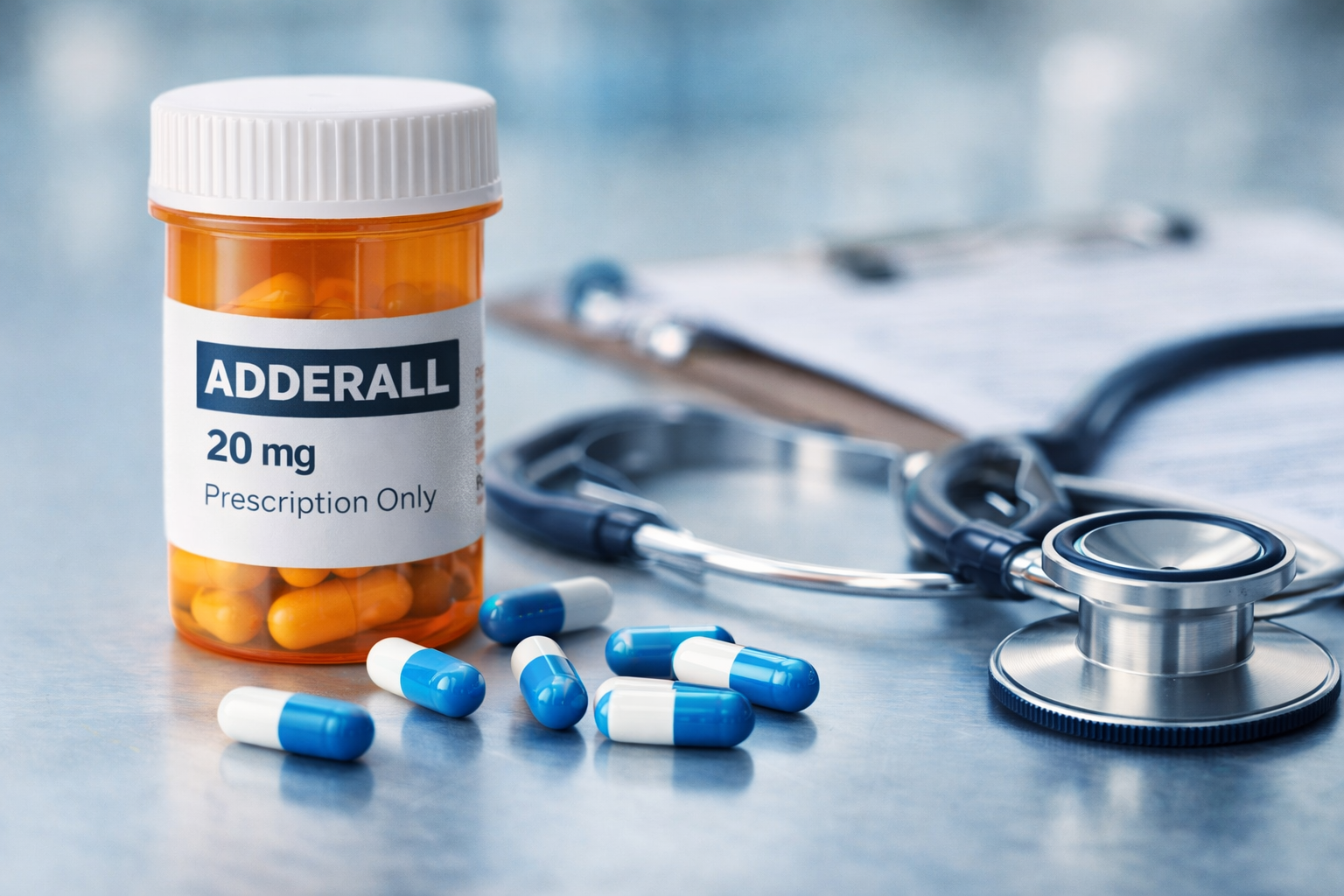
Is it healthy to take Adderall every day? This is a common and important question for people diagnosed with ADHD, as well as those concerned about long-term stimulant use. Adderall is one of the most widely prescribed medications for attention-related disorders, yet it is also one of the most misunderstood.
The truth is nuanced. Daily Adderall use can be healthy and appropriate for some people, but harmful for others, depending on medical supervision, dosage, individual health factors, and how the medication is being used.
This article explores how Adderall works, the benefits of daily use, potential risks, long-term effects, and when daily use may not be healthy.
What Is Adderall?
Adderall is a prescription stimulant medication composed of mixed amphetamine salts. It is FDA-approved to treat:
- Attention-Deficit/Hyperactivity Disorder (ADHD)
- Narcolepsy
Adderall increases levels of dopamine and norepinephrine in the brain — neurotransmitters that regulate focus, motivation, alertness, and impulse control.
How Adderall Works in the Brain
In people with ADHD, dopamine signaling is often underactive in regions responsible for executive function. Adderall helps by:
- Improving attention span
- Enhancing working memory
- Reducing impulsivity
- Increasing task persistence
Importantly, Adderall affects people with ADHD differently than those without it. When used appropriately, it tends to normalize brain activity rather than overstimulate it.
Is It Safe to Take Adderall Every Day?
Short Answer:
Yes, daily Adderall use can be safe and healthy — when prescribed and monitored by a healthcare provider.
Long Answer:
Safety depends on multiple factors, including:
- Correct diagnosis
- Appropriate dosage
- Individual cardiovascular health
- Sleep and nutrition habits
- Mental health history
- Duration of use
Millions of adults and children take Adderall daily under medical supervision with positive outcomes.
Benefits of Taking Adderall Every Day for ADHD
When used as prescribed, daily Adderall use may provide significant benefits, including:
1. Improved Focus and Productivity
- Better ability to sustain attention
- Reduced distractibility
- Improved work and academic performance
2. Emotional Regulation
- Decreased frustration
- Improved emotional control
- Reduced overwhelm
3. Lower Risk of Risky Behaviors
Research suggests untreated ADHD is associated with higher rates of substance misuse and impulsive behavior. Proper stimulant treatment may reduce these risks.
4. Consistent Symptom Management
For many people, skipping doses leads to emotional instability, poor focus, and executive dysfunction, making daily use preferable.
Potential Side Effects of Taking Adderall Every Day
Even when taken correctly, Adderall can cause side effects — especially with long-term daily use.
Cardiovascular Effects
- Increased heart rate
- Elevated blood pressure
- Rare cardiac complications in individuals with heart conditions
People with preexisting heart disease should be closely screened before starting Adderall.
Appetite Suppression and Weight Loss
- Decreased appetite
- Missed meals
- Possible nutrient deficiencies
Chronic under-eating can lead to fatigue, hormone disruption, and weakened immune function.
Sleep Problems
- Difficulty falling asleep
- Reduced sleep quality
- Stimulant “crash” later in the day
Poor sleep can worsen ADHD symptoms, creating a counterproductive cycle.
Mental Health Changes
- Increased anxiety
- Irritability
- Mood swings
- Emotional blunting
People with anxiety disorders or bipolar disorder may be more sensitive to stimulant effects.
Can You Build a Tolerance to Adderall?
Some individuals experience tolerance, meaning the medication feels less effective over time. This does not happen to everyone and may be influenced by:
- Dose escalation
- Chronic sleep deprivation
- Nutritional deficiencies
- Stress levels
Tolerance should always be addressed with a healthcare provider — not by increasing dosage independently.
Is Adderall Addictive When Taken Daily?
Adderall has a known potential for misuse, but addiction risk is significantly lower when:
- Taken as prescribed
- Used for ADHD rather than performance enhancement
- Avoided in people with substance abuse history unless closely monitored
Psychological dependence is more common than physical addiction, particularly when the medication is used to compensate for burnout or overwork.
Long-Term Effects of Taking Adderall Every Day
Long-term studies suggest that properly monitored stimulant use does not cause brain damage or reduced intelligence. However, long-term use requires ongoing evaluation.
Doctors often monitor:
- Blood pressure and heart rate
- Weight and growth (in children)
- Sleep patterns
- Mood changes
- Effectiveness over time
Some patients benefit from periodic breaks, while others experience worsening symptoms when they stop.
When Daily Adderall Use May NOT Be Healthy
Daily Adderall use may be unhealthy if:
- It is taken without a prescription
- Dosage exceeds medical guidance
- It is used solely for productivity or weight loss
- Side effects interfere with sleep, nutrition, or mental health
- The medication replaces healthy habits rather than supporting them
Using Adderall as a substitute for rest, recovery, or lifestyle balance is a warning sign.
Alternatives and Complementary Approaches
Some people take natural alternatives alongside or instead of Adderall, such as:
- Behavioral therapy
- ADHD coaching
- Sleep optimization
- Nutritional support
- Non-stimulant medications
- Lifestyle-based focus strategies
Medication works best when combined with broader ADHD management strategies.
Final Verdict: Is It Healthy to Take Adderall Every Day?
Yes — taking Adderall every day can be healthy and medically appropriate for many people with ADHD.
However, it is not universally safe, nor should it be treated as a harmless cognitive enhancer.
Daily use should always involve:
- Medical supervision
- Ongoing reassessment
- Attention to sleep, diet, and mental health
If you are questioning whether daily Adderall use is still right for you, that question itself is worth discussing with a healthcare professional.
Looking For Something That Really Works?
See Our Current #1 Rated Cognitive Enhancer: Nooceptin
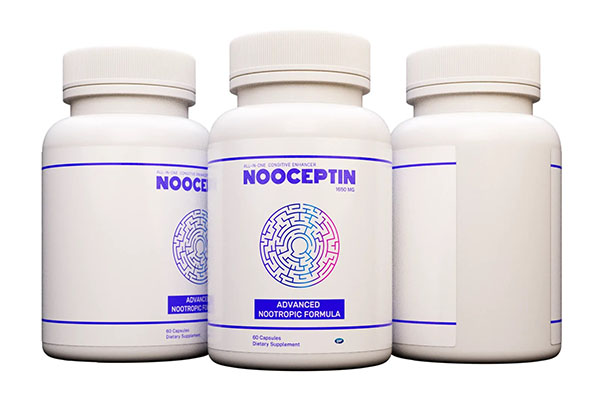
Nooceptin is our current top rated nootropic. We tried Nooceptin ourselves and found that it works exactly as advertised. Taken together, the ingredients rapidly increase focus, accelerate mental processing speeds, and enhance working memory.
Nooceptin is a truly comprehensive nootropic, providing both immediate and long-term benefits. It does not cause side effects and is considerably better value than other nootropic stacks on the market today.
Nooceptin has been found to effectively:
- ✔️ Boost Overall Cognitive Function
- ✔️ Improve Memory
- ✔️ Enable Better Communication
- ✔️ Enhance Concentration
- ✔️ Improve Multi-tasking
- ✔️ Boost Mental Energy
The really special thing about Nooceptin, however, is its long-term effects. When taken daily for prolonged periods, Nooceptin stimulates neuron growth and improves overall brain cell health. This means it enhances cognition in a deep, meaningful way that keeps giving you benefits after you stop using it.
Simply put, Nooceptin is the ideal brain supplement for people who need to mentally perform at 100% capacity for hours on end. At $69.99 per course, we think it's hard to find a more effective and cost-effective nootropic right now.

Brian Johnson is current Editor of Vagarights.com and a long-time writer for VAGA. A former psychologist, Brian is passionate about improving mental health and finding ways to stave off cognitive decline. He is an expert on nootropics, cognitive enhancement and biohacking more broadly. You can see his work on Google scholar.
Leave a Reply